The solar panel thermal recycling processing capacity of a line depends on the thermal chamber, the shredder and the separation deck, and the scalability of that design decides how far the plant can grow. You, as a recycling company manager or as a plant engineer, examine the solar panel thermal recycling processing capacity against the module volume that the region supplies. A line that fits the supply runs at its design rate from the first month.
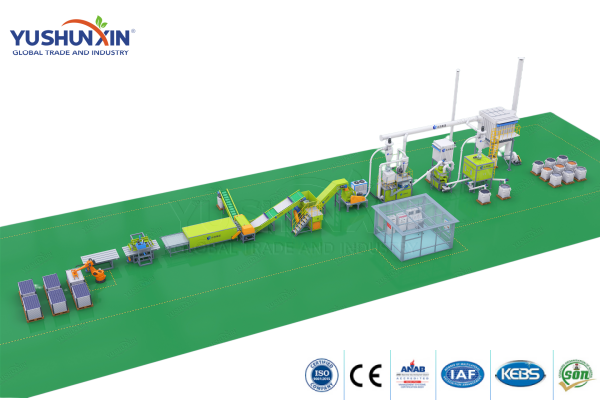
Which unit limits the capacity?
The thermal chamber, the shredder and the separation deck each carry a rated throughput, and the smallest unit sets the capacity of the whole line. A increasing pv recycling processing capacity review measures the cycle time of each unit, and that measurement shows the bottleneck. You compare the rated values with the values at the design module size. The result then points to the unit that needs the upgrade.
How does a buffer increase the throughput?
A buffer between the shredder and the thermal chamber allows each unit to work at its own rhythm, and that buffer absorbs a short stop without affecting the whole line. A capacity increase for a thermal recycling line often starts with that small investment, because the cost is low and the effect is immediate. You size the buffer from the cycle time of each unit and keep it at a defined level. The line then runs at a stable rate.
How does the separation stage fit the capacity?
The sieving deck and the density separator process a volume that depends on the particle size, and a coarse product slows the separation. A thermal recycling capacity cost study compares the cost of a larger deck with the cost of a second shift, and that comparison shows the cheaper route. You test the local module mix, because a broken-glass batch produces more fines. The chosen option then matches the real supply.
How does the plant verify the new capacity?
A full-shift test with the design feedstock gives the achieved tonnage, and that figure confirms the upgrade. You keep the weighbridge tickets and the operating log, because the two records show whether a shortfall comes from the equipment or from the feeding. The contractor then corrects the remaining bottleneck. The plant receives a measured capacity that the team can repeat.
Conclusion for recycling companies and plant engineers
Processing capacity improves when the plant identifies the limiting unit, adds a buffer and sizes the separation stage for the real module mix. A pv recycling capacity advisors team that supplies the throughput balance, the upgrade plan and the test protocol helps the operator reach the new rate. The volume of end-of-life modules keeps rising, and a plant with a scalable design grows with that volume. If your team needs a reference for the process configuration and the capacity scope, you can learn more about https://solutionsforewaste.com/solar-panel-recycling-plant/ before the next upgrade review. The same throughput record also supports the next investment application, and that document shows the lender that the plant reaches its design rate with the local module supply.