The lithium battery recycling plant investment cost covers the capital expenditure of the equipment, the site works, the permit and the working capital, and the total decides whether the project starts. You, as a project investor or as a recycling company manager, examine the lithium battery recycling plant investment cost against the available funding before the order. The budget then becomes a number that the board can compare with the return.
Which items form the investment?
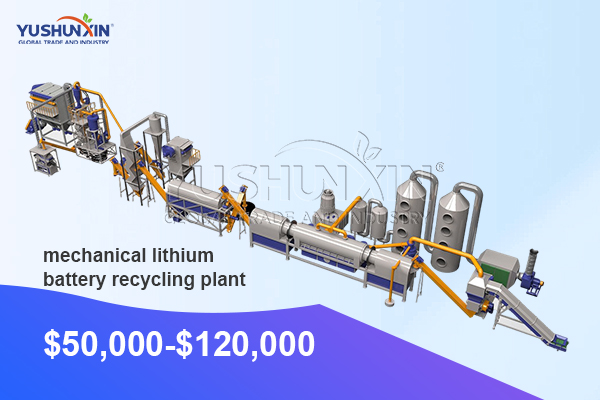
The shredding and separation line, the dust collection, the storage area and the laboratory form the equipment block of the plant. The start-up investment for a battery recycling project also carries the civil works, the electrical connection and the fire protection as separate lines. You add the working capital for the first months of pack purchases, and that amount grows with the distance to the collection network. The permits close the budget.
How does the capacity change the capital?
A line of 500 kilograms per hour and a line of 1000 kilograms per hour share several unit designs, and the larger plant costs less for each tonne of capacity. The capital needed for a lithium battery recycling plant therefore depends on the volume that the region can deliver, because an oversized line carries idle capacity. You compare two capacities against the same supply. The owner then selects the size that the market supports.
How does the recovery route change the investment?
A mechanical route requires less capital and produces black mass for a refiner, while a combined route adds a hydrometallurgical section and recovers the metal on site. A hydrometallurgical plant investment comparison shows the extra capital and the extra revenue of that option. You test both routes with the same battery supply, because the second one needs a larger volume. The owner then selects the route that matches the available capital.
How does the company fund the project?
Equity, a commercial loan and a public programme form the three sources that most projects combine. You match each source with the asset it finances, because a short loan cannot fund a ten-year machine. The financing plan then shows the cash that the company must raise. The project reaches the start date with a closed structure.
Conclusion for project investors and recycling companies
The investment needed to start a battery recycling project covers equipment, site works and working capital, and the capacity and route decide the total. A battery recycling investment advisors team that supplies the capital budget, the capacity comparison and the funding structure helps the investor start with a bankable plan. The supply of spent batteries keeps growing, and a well funded plant starts production while the demand is strong. If your team needs a reference for the process route and the investment scope, you can learn more about https://www.sxlbp.com/products/lithium-battery-recycling-machine-cost/ before the next investment review. The same budget also supports the application for the environmental permit, and that document shows the authority that the plant covers the treatment of every waste stream. The file stays with the project office.