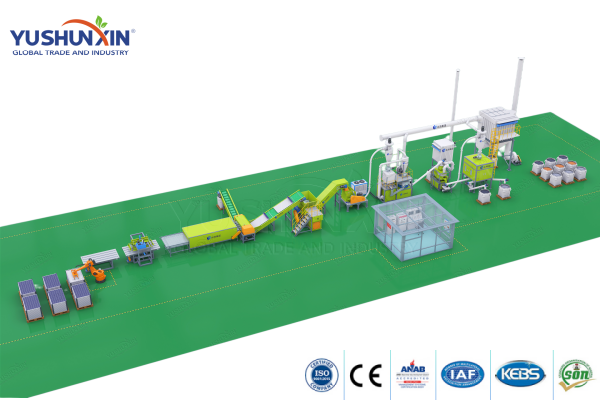
A site that already shreds metal, processes glass or assembles modules can host a photovoltaic recycling line without building a new plant, and you, as an industrial plant manager or as an engineering contractor, select the technology that fits the existing material flow. A 1 ton per hour solar panel recycling plant offers a capacity that matches a medium industrial site, and that capacity defines the footprint, the power demand and the storage area. The 1 ton per hour solar panel recycling plant then connects to the existing utilities, and that connection reduces the civil works.
Which technology options suit an existing line?
A mechanical route with dismantling, crushing, screening and electrostatic separation fits a site that already operates material handling equipment. A thermal route adds a delamination chamber, and that chamber requires gas extraction and a fire protection concept. A combined route uses thermal treatment for the encapsulant and mechanical separation for the fractions, and that combination suits mixed input. Your engineering team compares the three options against the available space and the permit conditions of the host site.
How do you connect the new line to existing utilities?
The electrical supply, the compressed air network and the water circuit must serve the new equipment, and a solar panel recycling technology for existing lines review confirms the available capacity. The dust collection system may share a filter house with the host process when the air volume allows that arrangement. Your project team plans the tie in during a scheduled shutdown, and that planning limits the production loss. The control system then follows the alarm philosophy of the host plant.
How does the capacity of the line change the integration work?
A higher capacity needs a wider feeding station and a larger separation area, so the footprint grows with the target tonnage. A solar panel recycling line capacity that matches the contracted intake avoids both idle hours and material backlog. Your project office reserves space for a second module, and that reservation allows growth without a new building. The modular approach also allows the site to start production after the first installation stage.
How do you validate the performance of the integrated line?
The commissioning test measures throughput, recovery rate and dust concentration at the operating condition of the host site. A PV recycling line integration with production site protocol also records the interaction with the existing utilities, because a pressure drop in the compressed air network affects the whole site. Your operating team trains on the new equipment before the first campaign, and that training protects both plants during the transition.
Conclusion for industrial plant managers and engineering contractors
Integration succeeds when the technology respects the constraints of the host site instead of assuming a greenfield layout. A PV recycling line integrators team that provides utility schedules, drawings and commissioning support reduces the interface risk of the project. Adding recycling capacity inside an existing manufacturing site also improves material efficiency, and that improvement supports the environmental targets of the group. If your team needs a reference for the integration scope and the capacity choice, you can learn more about https://www.spdsx.com/product/solar-panel-recycling-line/ before the design review.