Module recycling releases dust from crushing and vapour from thermal treatment, and those two streams decide whether the plant keeps its permit, so you, as a recycling company manager or as a plant engineer, design the process around the limits from the first drawing. A solar module recycling process combines dismantling, delamination, crushing and separation, and each stage produces a different emission profile. The solar module recycling process then needs extraction, filtration and monitoring equipment that match those profiles.
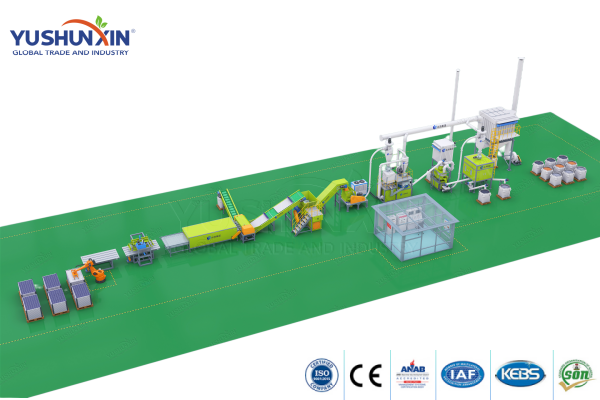
Which emission sources appear in a module recycling line?
The dismantling station releases small amounts of dust when frames and junction boxes are removed. The thermal stage releases vapour from the encapsulant, and that vapour requires extraction and, in some cases, thermal oxidation. The crushing and screening stages generate fine glass and silicon dust, and that dust represents the largest particulate load. Your process engineer maps these sources on the layout drawing, and that map defines the extraction points for the ventilation design.
Which equipment keeps the line inside the limits?
A bag filter house with pulse cleaning, an enclosed conveyor system, a cyclone pre separator and a monitoring cabinet form the technical answer to the permit. Processing equipment with sealed transfer points reduces the dust load inside the building, and that reduction lowers both the cleaning effort and the health risk. A PV module recycling emission control review sizes the air volume, the filter area and the fan pressure for the worst operating case. Treatment machinery with continuous data logging supplies the records that inspectors request.
How do you validate performance before the permit review?
The commissioning test measures dust concentration, vapour composition and the pressure drop of the filter at rated capacity. Your laboratory analyses the recovered fractions at the same time, because product quality and emission performance come from the same operating condition. A solar module recycling plant design that reserves space for the monitoring instruments avoids a later modification of the building. The test report then supports the permit file and the performance guarantee.
How do you keep compliance during daily operation?
The operating team records the running hours of the filter, the cleaning cycle and the replacement dates of the filter bags. A module recycling emission limits planning document defines the alarm limits for each parameter, and those limits trigger a maintenance action before the emission rises. Your quality team samples the working environment every month, and that record shows the trend. Preventive maintenance then keeps the line inside its envelope without interrupting production.
Conclusion for recycling companies and plant engineers
Emission control belongs to the process design, because dust and vapour follow from the equipment selection and the operating parameters. A PV module recycling project advisors team that supplies process data, monitoring plans and commissioning support keeps the plant inside its permit from the first shift. Reducing air pollution also protects the workforce and the neighbouring community, and that protection sustains the licence of the site. If your team needs a reference for the extraction and filtration scope, you can learn more about https://solutionsforewaste.com/pv-recycling-technology/ before the permit application.