A pv recycling solution technical route defines the sequence from dismantling to separation, and the commissioning risk concentrates in the weeks in which that sequence meets the real modules. You, as an EPC contractor or as a recycling company manager, examine the pv recycling solution technical route before the installation plan. The commissioning stage then proves that each unit performs as the contract promises.
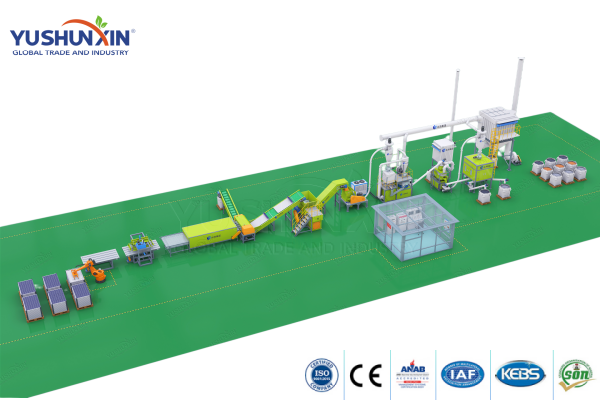
Which risks appear during commissioning?
The missing cable, the blocked duct and the wrong screen size form the three defects that appear most often in the first week. A commissioning risk in pv module recycling projects review also examines the feedstock, because a plant without the design module mix cannot reach its rated output. You record each defect with an owner and a closure date, and that record becomes the punch list. The project then closes the items in a controlled order.
How does the commissioning plan reduce them?
A cold test verifies the wiring, the interlocks and the rotation of each drive, and a hot test proves the throughput with real modules. A commissioning plan for a pv recycling line reserves the module stock for the test, because a plant without material cannot demonstrate its capacity. You invite the operator team to the same session, and that training removes the delay of a trial-and-error start. The plan then converts the test into a documented result.
How does the equipment scope affect the risk?
A package that includes the ducting, the control cabinet and the commissioning support arrives as one unit, and that completeness removes the boundary where responsibility is lost. A commissioning scope for pv recycling equipment review lists what the supplier delivers and what the site provides, and that list becomes an annex of the contract. You verify the cable schedule with both parties before the shipment. The contractor then avoids a stop that lasts for weeks.
How does the contractor hand over the plant?
The handover certificate lists the interfaces that passed, the punch list that remains and the performance figures of the test. You keep the operating log and the laboratory results in the same file, because the owner needs both for the first month. The training record and the spare parts list complete the handover. The plant then starts with a documented baseline.
Conclusion for EPC contractors and recycling companies
Commissioning risk falls when the technical route, the equipment scope and the test plan are agreed before the installation, and the handover file proves the result. A pv recycling commissioning advisors team that supplies the test protocol, the punch list and the training plan helps the contractor deliver a plant that works. The volume of end-of-life modules keeps rising, and a plant that starts cleanly serves that volume from the first shift. If your team needs a reference for the line configuration and the commissioning scope, you can learn more about https://www.spdsx.com/product/solar-panel-recycling-line/ before the next handover. The same file also supports the warranty claim when a unit underperforms during the first year of operation.