A battery material recycling line separates the metals, the electrolyte residue and the black mass of spent packs, and the investment that the owner approves in 2026 covers equipment, site works, permits and working capital. You, as a recycling company manager or as a project investor, compare the battery material recycling line investment with the revenue that the recovered material earns in the local market. The comparison shows the tonnage that the plant must process to cover its fixed cost each month.
Which items belong to the budget of a battery material recycling line?
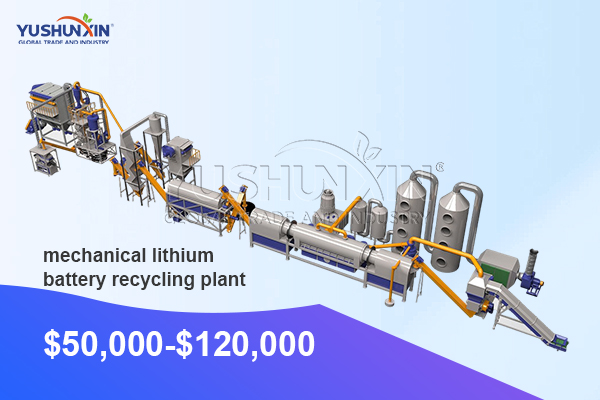
The discharge station, the shredder, the magnetic and eddy current separators, the sieving deck and the dust collection system form the equipment block of the plant. The cost of building a battery material recycling line in 2026 also includes the fire suppression of the storage area, the concrete floor and the electrical room. You separate the machine price from the installation price, because a quotation that covers only the units hides the work of the contractor. The working capital for the first pack purchases then closes the budget.
How does the capacity choice change the total investment?
A line of 500 kilograms per hour and a line of 1000 kilograms per hour share several unit designs, and the larger plant therefore costs less for each tonne of capacity. A battery pyrolysis disposal process for recycling lines reference helps the owner compare the two routes with the same feedstock, because the thermal option changes the equipment list and the permit scope. You size the plant against the volume that the region can deliver, since an oversized line carries fixed cost without production. The lithium fleet of the service area normally defines that volume.
How do site works and utilities affect the 2026 budget?
The transformer, the fire water tank, the weighbridge and the access road appear on the civil side of the budget, and their cost follows the local construction index rather than the machine quotation. A budget structure for a battery material recycling line therefore carries a separate line for each of those items. You confirm the capacity of the incoming supply before the order, because a weak connection forces an upgrade that costs more than the original estimate. The permit fees and the environmental study complete the site block.
How does the owner compare two quotations on the same basis?
A comparison table with the same capacity, the same product specification and the same scope of supply turns two different offers into one decision. You ask each supplier for the mass balance, the equipment list, the erection scope and the commissioning plan, and the four documents answer most of the technical questions. A supplier that leaves the dust collection or the control system outside its scope appears in the table with a lower price and a larger hidden cost. The owner then negotiates with knowledge instead of with the total figure alone.
Conclusion for recycling companies and project investors
The cost of a battery material recycling line in 2026 follows the capacity, the site works and the scope of the supply contract, and a measured budget keeps the project inside the approved amount. A battery recycling line cost advisors team that supplies the equipment list, the mass balance and the comparison table helps the owner reach a decision that the bank accepts. The supply of spent packs keeps growing, and a plant that starts with the right capacity serves that supply without idle hours. If your team needs a reference for the process route and the investment scope, you can learn more about https://www.sxlbp.com/products/lithium-battery-recycling-machine-cost/ before the next budget review.