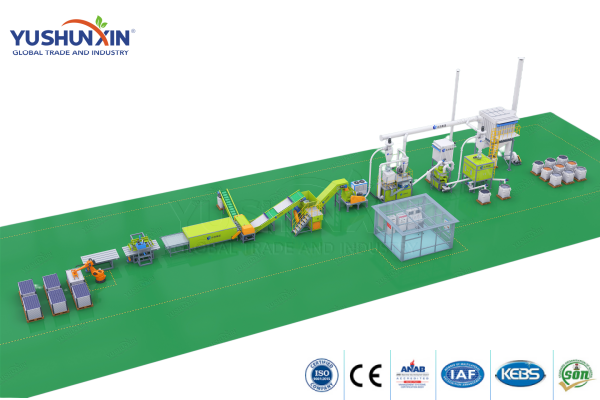
A recycling plant delivers value when every stage of the process connects to the next one, and you, as a recycling company manager or as a project engineer, configure the line as one system instead of a list of machines. A solar panel recycling process starts with dismantling, continues with thermal or mechanical delamination and finishes with crushing, screening and separation of the recovered fractions. The solar panel recycling process then produces clean glass, aluminium, copper and silicon that the market accepts without further treatment.
Which stages must the plant include?
The dismantling stage removes the frame and the junction box, and that step recovers clean aluminium and copper. The delamination stage releases the encapsulant so the glass separates from the cells. The crushing and separation stage recovers the silicon fraction and the metal fines. Your engineering team defines the capacity of each stage in one table, and that table shows whether the line reaches the target throughput or whether one unit limits the whole plant.
How do you size the plant for a mixed input stream?
A stream with whole modules, broken glass and factory rejects requires buffer capacity between the delamination chamber and the crusher, because those inputs behave differently in the same equipment. A complete solar panel recycling plant configuration also defines the storage area for two weeks of intake, and that area keeps the plant running when collection slows down. Your team confirms the input specification with the module owners before the equipment order, and that confirmation protects the process design.
How do the stages interact during operation?
The thermal stage sets the moisture and the temperature condition of the material that reaches the crusher, and an unstable condition lowers the separation efficiency. The screening stage defines the particle size that the electrostatic separator accepts, and that size decides the purity of the recovered material. A solar panel recycling line integration review documents the interface between stages, and that document becomes the operating instruction for the shift team. Your maintenance plan then follows the running hours of each unit.
How do you plan the investment and the operating cost?
The investment covers the equipment, the process hall, the utilities and the permit work, and the operating cost covers energy, labour, filter replacement and wear parts. A solar panel recycling cost model that separates these groups shows the cost per processed tonne, and that figure supports the sales negotiation with the downstream buyer. Your finance team tests the model with two capacity scenarios, and the comparison shows which configuration fits the available capital.
Conclusion for recycling companies and project engineers
A complete configuration converts several machines into a controlled process, and that process delivers a stable recovery rate every shift. A solar panel recycling programme developers team that supplies drawings, capacity tables and commissioning support reduces the risk that a new line misses its guarantee. Glass recycling also benefits from the clean fraction that the plant produces, and that cleanliness supports the environmental case of the project. If your team needs a reference for the configuration and the cost structure, you can learn more about https://solutionsforewaste.com/solar-panel-recycling-plant/ before the next design meeting.