Equipment quotations arrive with a clear price, while site preparation often carries the largest uncertainty of a recycling project. The solar panel thermal recycling payback period therefore depends as much on foundations, buildings and utilities as on the crusher or the thermal chamber. You, as a project investor or as a plant construction manager, control that uncertainty with a defined scope before the tender. The solar panel thermal recycling payback period improves when your team completes the civil works package without change orders during construction.
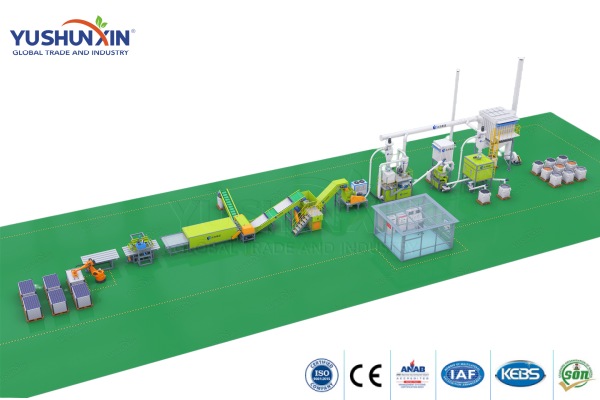
Which civil works items influence the solar panel thermal recycling payback period?
Foundations rank first, because a crusher, a thermal chamber and a screening unit require a rigid base with defined vibration limits. The process building ranks second, because ventilation, fire protection and drainage shape the construction cost. The yard ranks third, because module storage and container turning space affect the land requirement. Your cost engineer estimates each of these items separately, and that separation reveals which item offers the largest saving without compromising the process.
Which process requirements drive the building design?
The thermal chamber defines the building height and the ventilation volume, because the equipment releases heat and process gas. The dust collection system defines the roof load and the duct route, and that route influences the structural frame. The separation stage defines the floor flatness, because electrostatics and gravity separation demand a stable installation plane. Your design team fixes these parameters before the structural drawings begin, and that sequence prevents a costly redesign later.
How do utilities and drainage change the project cost?
Electricity supply capacity sets the transformer size, and a higher capacity often requires a longer connection period with the local utility. Water supply and drainage design reflect the cleaning needs of the process and the laboratory. Compressed air capacity supports actuators and instruments, and that capacity must match the final plant design rather than the first phase alone. A thermal recycling plant civil works planning review confirms each utility with the provider, because a late connection delays commissioning and extends the payback period.
How does your team phase civil works to shorten the payback period?
A phased plan builds the process hall and the first foundation set, and that phase allows production to start with one line. A solar panel dismantling line placed inside the first hall generates early cash flow while the second phase proceeds. Your construction manager then uses that revenue to fund the storage yard expansion and the second separation module. A civil works impact on solar panel recycling project analysis shows how phasing changes both the capital profile and the payback calculation.
Conclusion for project investors and construction managers
Civil works reward the project that defines the scope before procurement and keeps the phasing aligned with the cash flow. A photovoltaic recycling solution team that supplies equipment layouts, foundation loads and utility schedules gives the construction contractor a firm basis for pricing. The recycling process itself improves when the building supports clean material flow and safe maintenance access. If your team needs a reference for the next feasibility study, you can learn more about https://www.spdsx.com/product/solar-panel-recycling-equipment-cost/ before the next design meeting.