Electric two wheelers, passenger cars, buses, energy storage cabinets and consumer electronics drive battery demand across Southeast Asia, and that demand creates a matching wave of end-of-life packs. The lithium battery recycling plant market outlook in Southeast Asia therefore attracts investors who want a processing asset close to the source of the material. You, as a project investor or as a recycling company manager, evaluate capacity, regulation and downstream off-take before you sign a supply contract. The lithium battery recycling plant market outlook also depends on port access, because exporters of black mass compete for the same refinery capacity worldwide.
Which demand factors define the lithium battery recycling plant market outlook in Southeast Asia?
Vehicle electrification policies in Thailand, Indonesia, Vietnam and Malaysia accelerate the number of battery packs that enter the market each year, and those packs reach end of life after eight to twelve years of service. Battery manufacturing plants in the region generate production scrap, and that scrap offers immediate feedstock for a recycling line. Grid storage projects add stationary batteries with a different chemistry mix. Your analyst maps these three sources by province, and that map shows where the first plant should operate to minimize transport cost.
Which processing equipment suits a battery recycling line in a tropical climate?
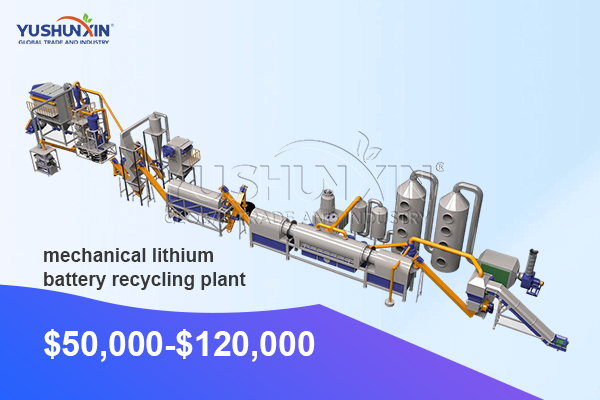
High humidity and high ambient temperature demand extra attention to dust control, electrical protection and cooling, and those requirements change the specification of the treatment line. A shredder with sealed bearings, a hammer mill with wear resistant liners, a dryer with controlled temperature and a dust collector with a moisture resistant filter operate reliably in tropical conditions. Processing equipment with stainless contact surfaces resists corrosion when the feed contains electrolyte residue. Your engineering team also plans a covered storage area, because wet feedstock reduces the efficiency of the separation stage.
How does the hydrometallurgical recovery process affect plant economics?
The hydrometallurgical route dissolves metals from black mass and recovers nickel, cobalt, manganese and lithium as separate products, and that separation raises the value of each tonne. The hydrometallurgical recovery process requires chemical reagents, wastewater treatment and skilled laboratory staff, so your cost model must include those items. A mechanical pretreatment stage feeds the hydrometallurgical plant with cleaner material, and cleaner material reduces reagent consumption. Your team then compares the integrated route with the sale of black mass to an external refiner, and that comparison decides the investment scope.
How do you plan battery recycling capacity for a growing regional market?
Capacity planning starts with the collection radius, because transport cost limits the distance that a pack can travel before the margin disappears. A battery recycling plant cost planning model then matches the equipment scope with the expected intake in year one and year five. A lithium battery recycling line investment with modular capacity lets your company add a second shift before adding a second line. Your commercial team secures battery collection agreements with fleet operators, because those agreements convert a market forecast into a contracted feedstock base.
Conclusion for project investors and recycling companies
Regional growth rewards the operator that secures feedstock first and matches capacity to the contracted volume. A battery recycling equipment manufacturer that provides layout engineering, operator training and commissioning support shortens the ramp-up period of a new plant. The electric vehicle battery continues to evolve in chemistry, and that evolution rewards a flexible treatment line. If your project team needs capacity and cost reference points for the region, you can learn more about https://www.sxlbp.com/products/lithium-battery-recycling-machine-cost/ before the next investment review.