Oil sludge is not simply a wet solid that can be placed into a pyrolysis reactor. Its water content, oil fraction, solids and physical condition can change how the material is fed, heated and discharged.
For projects using refinery sludge, tank-bottom sludge or drilling waste, feeding and residue discharge should be considered together with the main thermal-treatment system.
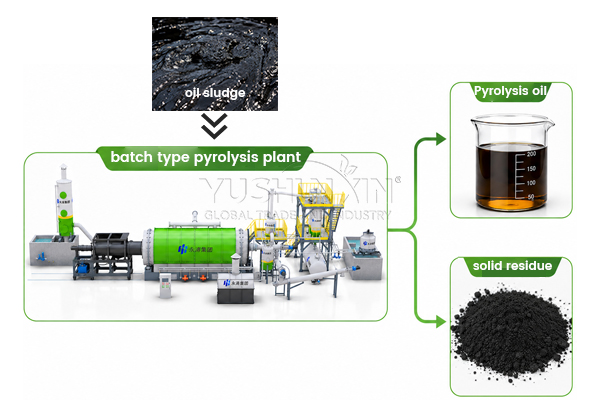
Why Does Sealed Feeding Matter?
Oil sludge can be sticky, wet and difficult to transport. A conventional open feeding arrangement may create material leakage, odor and unstable feeding.
An oil sludge recovery system can therefore use a closed feeding arrangement matched to the material condition.
Depending on the sludge properties, the front end may include:
- Dewatering or moisture reduction
- Mixing or conditioning
- Screw feeding
- Pumping for suitable liquid-rich material
- Sealed transfer into the thermal-processing section
The exact configuration should be determined after confirming the oil-water-solid composition rather than assuming one feeder works for every sludge.
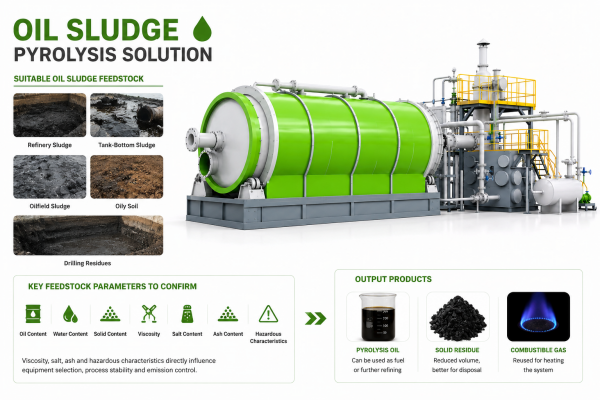
What Happens to the Residue After Treatment?
Thermal treatment does not make the solid fraction disappear. Oil sludge projects still need a controlled route for the remaining solid material.
The residue discharge for oil sludge pyrolysis should consider residue temperature, moisture, solids content and the next disposal or utilization step.
A practical system may therefore need controlled cooling, enclosed conveying and a defined collection point before the residue leaves the processing area.
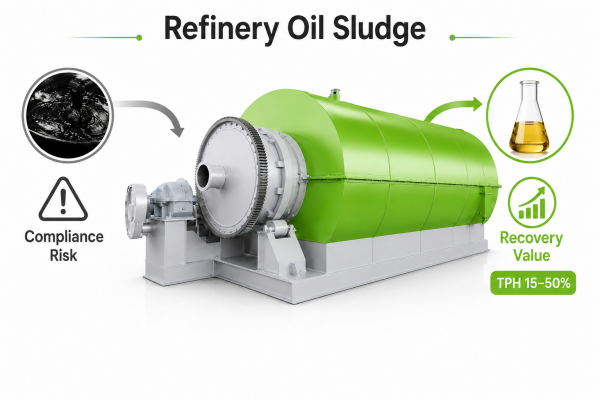
Why Should Feeding and Discharge Be Designed Together?
If feeding is stable but residue cannot be discharged continuously or safely, the entire line can lose operating time.
This is why oil sludge line configuration should connect the front-end pretreatment, sealed feeding, thermal section, residue discharge and off-gas treatment.
The objective is not to add equipment unnecessarily. It is to make each section match the actual sludge characteristics.
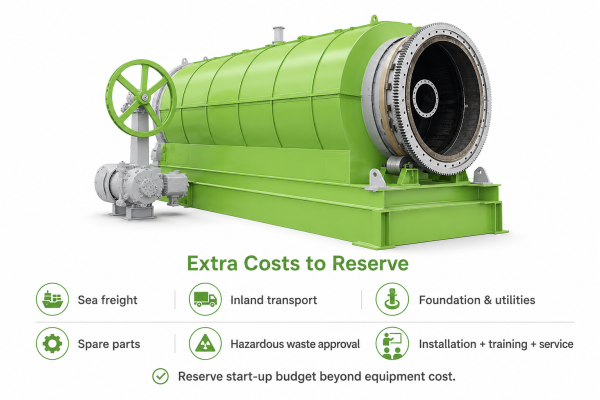
What Should Be Confirmed Before Equipment Selection?
Before requesting a proposal, prepare:
- Oil, water and solid content
- Sludge source
- Particle and viscosity characteristics
- Daily processing quantity
- Residue disposal requirements
- Local environmental requirements
For oil sludge, the most useful equipment discussion starts with the material analysis. Once the feedstock boundary is clear, the supplier can determine whether dewatering, conditioning, sealed feeding and controlled residue discharge need to be included.
Leave a Reply