A tire pyrolysis project can use passenger-car tires, truck and bus tires, OTR tires, or rubber production scrap, but these materials do not always enter a recycling line in the same form. Their size and physical condition can affect how the material is prepared, transferred, and fed before thermal processing begins.
For this reason, feeding design is not a detail to decide after choosing the reactor. It is part of the project configuration from the start.
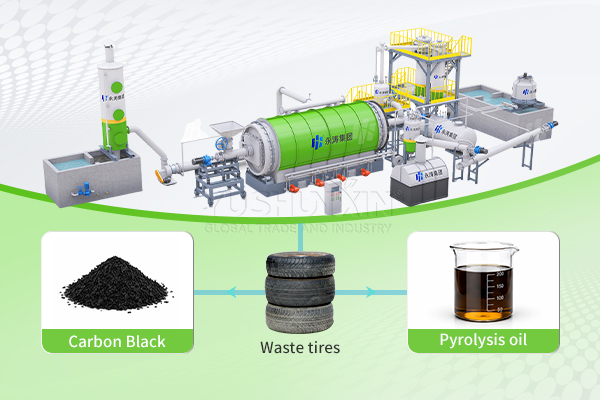
Start With the Tire Form Reaching the Site
Before reviewing equipment, identify what actually arrives at the plant. A project receiving whole tires has a different material-handling problem from one receiving cut tires, smaller rubber pieces, or production scrap.
A tire recycling pyrolysis solution should therefore be evaluated around the real feedstock rather than around a nominal capacity alone. The equipment route needs to connect the incoming tire form with a stable way of moving material into the pyrolysis section.
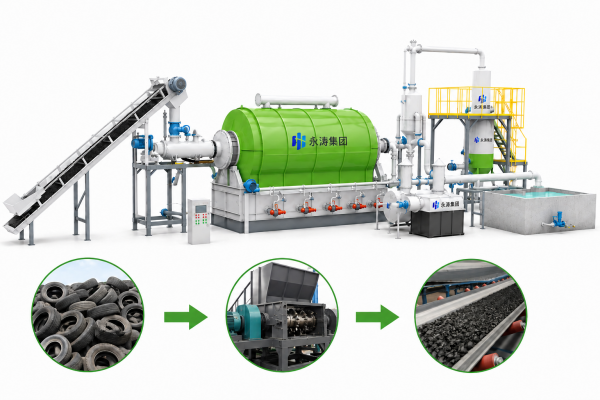
Why Can Larger or More Variable Tires Complicate Feeding?
Large or mixed tire sizes can make material flow less uniform. That does not automatically mean one specific pretreatment method is required, but it does mean the project needs to review how consistently the tires can be handled before feeding.
This is where tire feedstock preparation for pyrolysis becomes important. Feedstock preparation is not only about reducing size. It also helps define whether the material can be stored, transferred, and supplied to the next process stage at a predictable rate.
If tire size varies significantly from batch to batch, the feeding arrangement may need more flexibility. If the feedstock is already prepared into a stable form, a more regular feeding rhythm becomes easier to design.
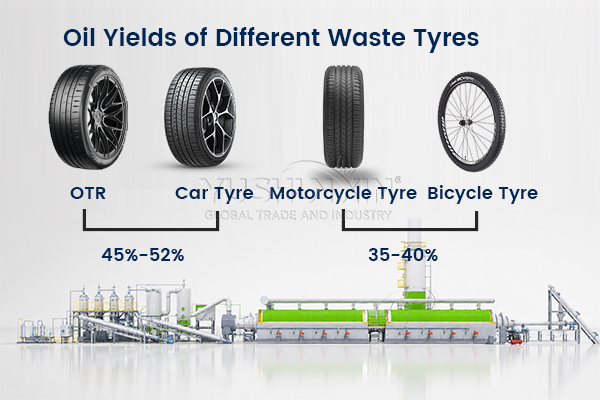
Feeding Design Should Match the Overall Plant Route
The feeding system also needs to fit the selected operating structure. Batch, semi-continuous, and fully continuous pyrolysis routes do not use material in exactly the same production rhythm.
As a result, feeding system design for tire pyrolysis should be considered together with pretreatment, reactor operation, residue discharge, and downstream product handling. Looking at these sections as one system is more useful than selecting each machine independently.
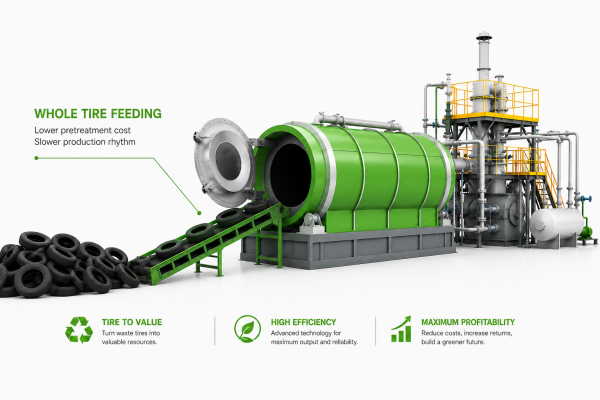
What Information Should Be Confirmed First?
Before asking for a project configuration, prepare a simple feedstock description: tire type, physical form, expected daily supply, and whether any size reduction or separation is already available.
Once those points are clear, the equipment supplier can review a feeding and pretreatment route that better matches the actual material flow. That reduces the risk of selecting a plant structure that looks suitable on paper but does not match the tires arriving at the site.
Leave a Reply