As the global volume of end-of-life photovoltaic panels continues to grow, many investors are evaluating medium-capacity recycling projects with strong return potential. A 500kg/h solar panel recycling plant is often considered one of the most balanced options, combining reasonable startup cost with commercial-scale processing capability. However, total investment is not limited to equipment price alone. It also includes installation, utilities, labor planning, and long-term operating efficiency. At YUSHUNXIN, we manufacture solar panel recycling equipment designed to help customers build cost-effective and profitable recycling operations.
Core Equipment Investment
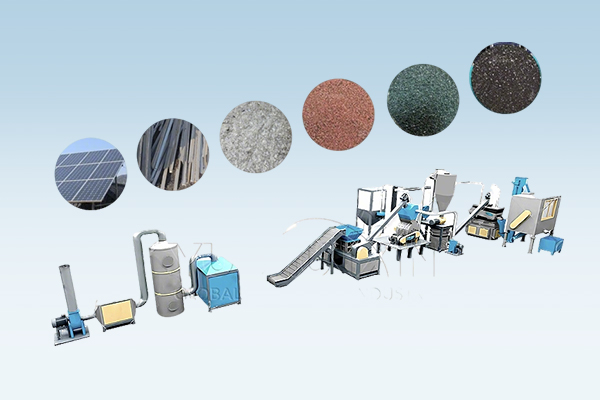
The largest share of total investment is the recycling line itself. A complete 500kg/h plant typically includes frame removal equipment, glass removal machines, crushing systems, screening units, airflow separation devices, dust collection systems, and electrical control cabinets.
The final price depends on automation level, material quality, and system configuration. Fully integrated systems require higher initial investment but significantly improve throughput, labor efficiency, and material recovery rates. For those evaluating a medium-scale recycling setup, understanding equipment configurations helps align investment with production goals.
YUSHUNXIN designs complete recycling lines with stable performance and practical layouts to maximize long-term value.
Factory Building and Infrastructure Costs
In addition to machinery, investors should consider facility preparation. This may include workshop rental or construction, concrete foundations, loading areas, electrical wiring, and ventilation systems.
A 500kg/h recycling line does not require extremely large space, but efficient layout planning is important for safe material flow and future expansion. Proper infrastructure reduces operational bottlenecks and improves daily productivity.
Labor and Operating Expenses
Daily operation costs mainly include labor, electricity, maintenance, and consumable parts. A semi-automatic system requires more workers for feeding and material handling, while an automated line can reduce labor demand and improve consistency.
YUSHUNXIN recycling equipment is designed with automated controls and optimized process flow, helping customers lower labor costs while maintaining stable output. Investing in automated front-end separation helps keep staffing requirements lean at this capacity level.
Material Recovery and Revenue Potential
Recovered materials create the main source of income. Solar panel recycling can generate revenue from aluminum frames, tempered glass, copper, and silicon-containing materials. Profitability depends on recovery purity, local commodity prices, and feedstock supply stability.
A well-designed 500kg/h line can process commercial volumes efficiently, creating a steady stream of recyclable outputs. Knowing what affects equipment pricing helps investors project payback periods more accurately.
Optional Costs and Customization
Some projects require additional modules such as shredders for mixed panels, advanced dust control systems, or customized feeding conveyors. Shipping, installation, training, and after-sales service should also be included in investment planning.
YUSHUNXIN offers customized plant solutions based on panel type, budget, and local operating conditions, ensuring each customer receives the most suitable configuration.
Why a 500kg/h Plant Is a Smart Investment
A 500kg/h solar panel recycling plant offers an ideal balance between cost and production capacity. It is large enough for profitable commercial operation while remaining manageable for first-time investors and growing recyclers.
As a professional manufacturer of solar panel recycling equipment, YUSHUNXIN provides reliable, efficient, and scalable systems that help customers control investment costs and build sustainable recycling businesses with confidence.
Leave a Reply