Retired photovoltaic modules contain glass, aluminium, silicon, copper, silver and polymer layers, and you, as a recycling company or as a municipal asset owner, face a growing volume that landfill sites accept with increasing reluctance. A solar panel thermal recycling technology separates those layers with controlled heat, mechanical handling and material sorting so that most of the module mass re-enters the material cycle. The solar panel thermal recycling technical route determines how much waste your project diverts, so the design decision shapes the environmental result of the whole facility.
Which process steps define a solar panel thermal recycling technical route?
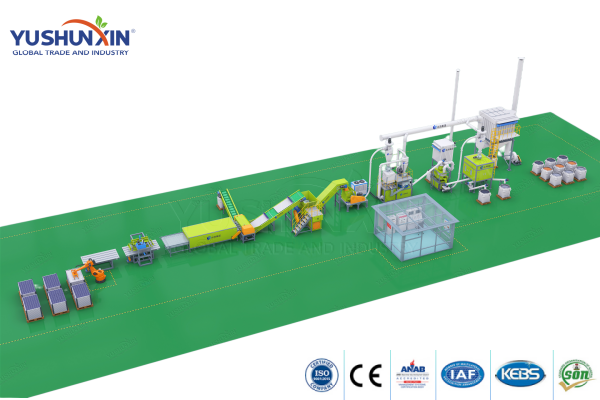
The route begins with frame removal and junction box separation, because those two operations recover clean aluminium and copper before thermal treatment. A thermal step then loosens the encapsulant that bonds glass to the cells, and that step allows the backsheet to separate from the glass sheet. Mechanical crushing, screening and electrostatic separation follow, and those stages concentrate silicon, silver and copper fractions for downstream refining. Your process engineer documents the temperature curve, the residence time and the cooling rate, because those three parameters control the quality of the recovered glass.
Which treatment equipment belongs to a PV module thermal treatment line?
A PV module thermal treatment line includes a dismantling table, a frame press, a thermal chamber, a cooling conveyor, a crusher, a vibrating screen, an electrostatic separator and a dust collector. Each item of processing equipment performs one defined duty, and that division keeps maintenance predictable for your technical team. The dust collection unit protects the workplace and captures fine powder that carries recoverable silver. Treatment machinery with sealed transfer points reduces material loss, and that reduction raises the recovery rate that your monthly report presents to management.
How does thermal delamination change material recovery rates?
The encapsulant releases its bond when the module reaches the target temperature band, and that release allows clean separation of glass from cells. Temperatures that rise too quickly damage the glass and reduce the value of that fraction, so your operators follow the validated heating curve. A slow cooling stage protects the silicon wafer structure and improves the yield of the silicon fraction. Your quality team measures glass purity, silicon content and metal concentration in every batch, and those measurements guide the adjustments that lift the recovery rate over time.
How do you plan a thermal recycling project for a municipal or industrial site?
Site planning starts with the annual intake forecast, because that forecast defines the capacity of the PV module thermal treatment line and the storage area for incoming modules. A thermal recycling process design for solar panel plants also covers the utility load, the emission control system and the traffic route inside the fence. Your project team compares a solar panel recycling cost breakdown before the equipment order, and the same team coordinates with the environmental authority early because the permit conditions shape the equipment specification. The financing plan then matches the intake curve, so the facility reaches break-even before the next wave of decommissioned modules arrives.
Conclusion for recycling companies and municipal asset owners
Landfill dependence falls when a project recovers glass, aluminium, copper and silicon inside a documented process instead of paying gate fees for mixed waste. A solar panel recycling equipment supplier that supplies process validation data and commissioning support helps your facility reach the design recovery rate during the first operating quarter. The photovoltaics sector keeps expanding, and that expansion guarantees a long-term supply of end-of-life modules for your project. If your team needs the next level of process detail, you can learn more about https://www.spdsx.com/product/solar-panel-recycling-line/ before the next procurement meeting.