A photovoltaic recycling project is not only about removing waste modules. The real business value comes from recovering useful materials and finding suitable downstream applications.
End-of-life solar panels contain several valuable components, including glass, aluminum, silicon, copper and other material fractions. The recovery value depends on module structure, separation technology and final product quality.
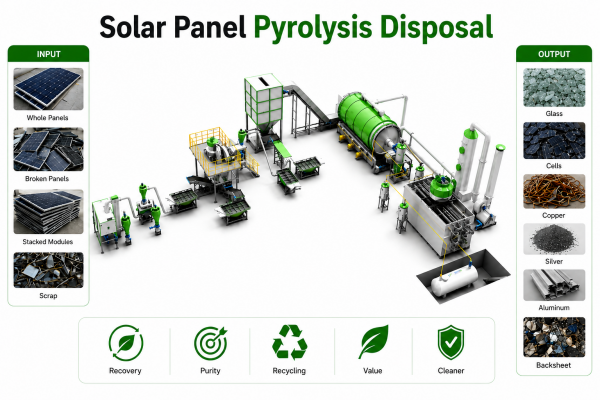
What Materials Can Be Recovered from Waste Solar Panels?
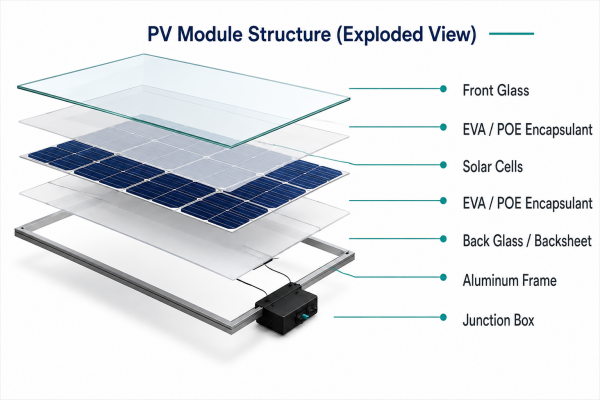
A typical photovoltaic module contains:
- Glass
- Aluminum frame
- Silicon cells
- Copper ribbons
- Junction box materials
- Encapsulation materials such as EVA or POE
Among these materials, glass and aluminum usually represent the largest mass fraction, while silicon and metal components may provide additional recovery value.
A complete solar panel recycling solution should therefore consider not only processing capacity but also the quality requirements of each recovered material.
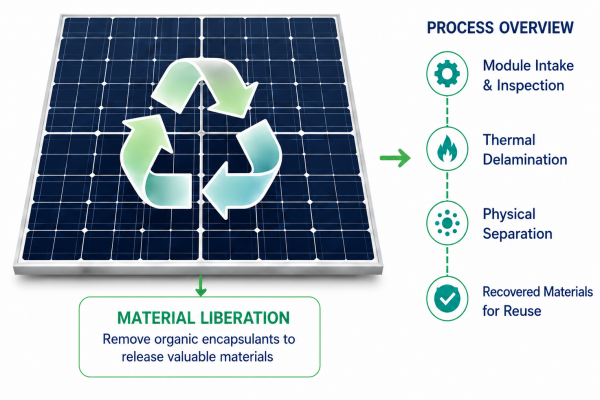
Why Does Separation Technology Affect Material Value?
Different module structures require different separation methods.
For single-glass modules, mechanical processing can include:
- Frame removal
- Glass separation
- Crushing
- Grinding
- Screening
- Physical sorting
For double-glass modules or modules with stronger encapsulation layers, thermal separation can help remove EVA and other organic bonding materials before further sorting.
A suitable PV thermal delamination process focuses on separating organic layers while keeping glass, silicon and metal materials available for recovery.
Which Factors Influence the Value of Recovered Materials?
The value of recovered PV materials depends on several conditions:
- Module type and structure
- Material purity
- Separation efficiency
- Processing cost
- Local market demand
For example, clean glass fractions can enter glass recycling channels, while silicon and metal-rich fractions may require additional processing depending on purity requirements.
Understanding recovered materials from solar panels helps recyclers evaluate whether their project should focus on high-volume recovery or higher-value material separation.
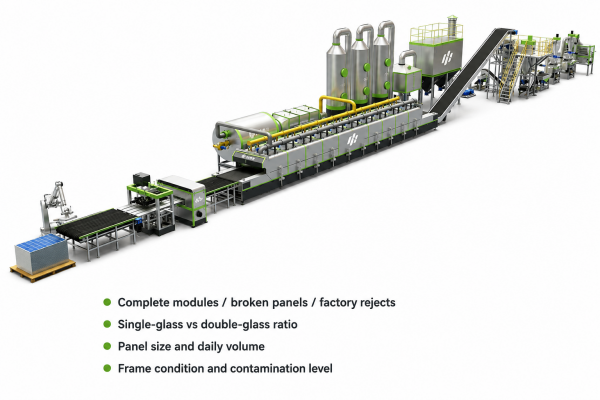
How Should Investors Evaluate a PV Recycling Project?
Before selecting equipment, investors should confirm:
- Incoming module types
- Expected processing capacity
- Target recovered products
- Local recycling markets
- Required material quality
A profitable PV recycling project connects the incoming feedstock with the right separation technology and downstream utilization.
The value of solar panel recycling is created not only by processing waste, but by transforming recovered materials into useful resources.
Leave a Reply