An oil sludge pyrolysis line cannot be designed from daily tonnage alone. Tank-bottom sludge, refinery sludge, drilling residues, and oily soil may contain very different proportions of oil, water, sand, salts, and ash.
Before selecting equipment, you need to understand this composition because it directly affects pretreatment, feeding, heating demand, reactor design, oil recovery, corrosion control, and residue handling.
Why Does Water Content Matter?
Water Increases the Thermal Load
Water does not produce pyrolysis oil. It must first be heated and evaporated before the hydrocarbon fraction can be effectively recovered.
If your sludge contains excessive water, the reactor spends more energy removing moisture, which can extend heating time, increase fuel consumption, and reduce effective processing capacity.
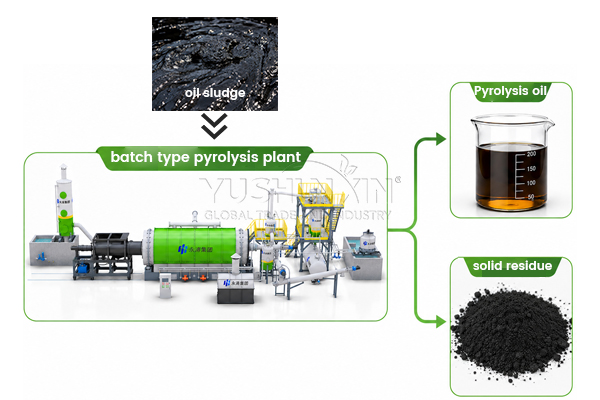
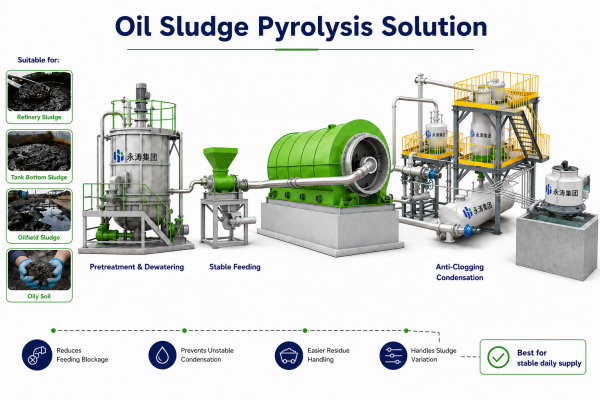
For high-moisture sludge, Yushunxin can add dewatering or dehydration equipment before the pyrolysis reactor, reducing unnecessary heat load and improving feeding stability.
How Does Sand Content Affect the Process?
Sand Adds Weight but Produces No Oil
Sand, soil, drilling solids, and other mineral impurities increase the total feed weight without contributing to oil recovery.
A sludge stream with 30% solids therefore behaves very differently from one dominated by recoverable hydrocarbons. High sand content can also increase equipment wear, residue volume, and the load on the discharge system.
If your sludge contains large amounts of sand or drilling cuttings, Yushunxin can configure screening, separation, or other pretreatment systems before thermal processing. Reactor and discharge structures can also be adjusted for heavier solid loads.
Why Is Salt Content Important?
Salts Increase Corrosion Risk
Oilfield and refinery sludge may contain salts, chlorides, sulfur compounds, or other corrosive components.
During heating, these contaminants can increase corrosion risks in the reactor, piping, condensation system, and downstream equipment. Salt content can also influence the quality of recovered oil and the characteristics of the final solid residue.
If your feedstock analysis shows high salt or corrosive components, Yushunxin can evaluate corrosion-resistant materials, reactor lining, and suitable gas- and liquid-handling configurations according to your actual sludge composition.
Does Oil Content Determine Recovery Potential?
The oil-water-solid ratio gives you a much better basis for evaluating an oil sludge pyrolysis plant than total tonnage alone.
A sludge stream with higher recoverable oil content generally offers greater liquid recovery potential. By contrast, a material dominated by water and mineral solids may require more pretreatment while producing less recovered oil per ton of feed.
This is why you should provide a representative feedstock analysis before asking for a fixed oil-yield estimate.
How Should Your Sludge Composition Change the Line Design?
Your project should begin with several basic parameters: oil content, water content, solid and sand content, salt level, viscosity, ash, daily capacity, and target residue standard.
Based on these conditions, Yushunxin can configure dewatering, impurity removal, feeding, reactor, condensation, corrosion protection, gas treatment, and residue discharge systems for your specific oil sludge treatment project.
The key question is not simply, “How many tons of sludge can the reactor process?” It is: what exactly is inside those tons, and how should the line be designed around it?
Visting Yushunxin official website: https://www.pyrolysisplantpro.com/oil-sludge-pyrolysis-solution/
Leave a Reply