A lithium battery recycling plant investment analysis starts with the process scope, because the equipment list and site works define most of the capital requirement. The lithium battery recycling plant investment analysis separates battery collection, discharge, dismantling, shredding, drying, separation and material handling into cost packages. capital budgeting then compares those packages with the expected cash flow from copper, aluminium and black mass sales. A project owner also reserves funds for permits, laboratory equipment, spare parts and working capital. The complete budget gives lenders and management one transparent basis for a 2026 investment decision instead of a single equipment quotation.
Which capital blocks belong in a 2026 lithium battery recycling plant budget?
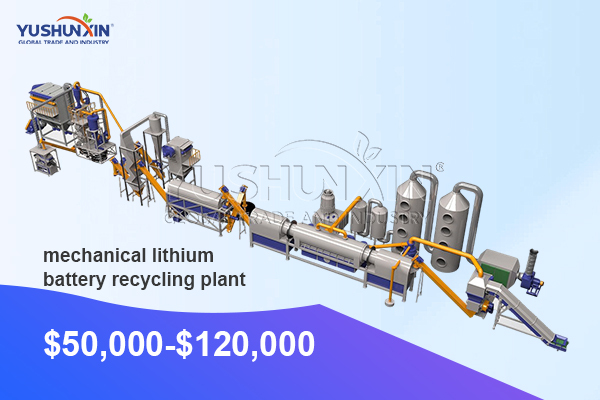
The first block covers process machinery: discharge tables, shredder, hammer mill, dryer, screens, magnetic separator, density separation equipment and dust collection system. The second block covers civil works, fire protection, utilities and the hazardous material storage area. The third block covers permitting, laboratory instruments and the first fill of spare wear parts. A 2026 lithium battery recycling plant budget also includes collection logistics and the working stock of used batteries before the plant earns its first sale. Owners separate fixed asset cost from start-up cost because each one follows a different financing schedule. The budget then shows the total funds required before stable production rather than the purchase price of one machine.
How do capacity and process configuration change the investment case?
A small mechanical line needs less space and fewer utility upgrades, while a larger plant gains scale but requires more collection volume and heavier material handling equipment. The configuration also changes cost when the project adds hydrometallurgical refining after black mass separation. A lithium battery recycling plant capital planning compares a modular first phase with a complete plant, and that comparison shows how much capital the owner can defer until the collection network matures. The hydrometallurgical lithium battery recycling plant route route helps engineers define the battery preparation, leaching and wastewater steps that follow the mechanical section. The right capacity matches contracted feedstock with realistic uptime, because idle processing equipment still consumes maintenance and finance cost.
Which regional conditions affect the plant cost without changing the equipment list?
Land value, building codes, grid connection, water supply and hazardous waste rules vary by region and influence the final investment. A site near battery collection points lowers transport cost, while a remote industrial park may offer cheaper land and higher utility cost. Import duties, local fabrication content and the availability of skilled electricians also change the budget. The project team obtains local quotations for civil works and utilities instead of applying a percentage from another country. That local evidence makes the investment analysis useful to a bank, because the lender can trace each major cost to a regional supplier and a defined scope for the recycling line.
Which financial tests give management confidence before approval?
The model tests payback, net present value and debt service under low, base and high scenarios for feedstock volume and recovered material prices. Management reviews the break-even throughput and the maximum collection distance that the project can support. The analysis also checks the working capital cycle, because a plant that waits months for assay results and payment can run short of cash even with strong annual revenue. Sensitivity cases show the effect of lower black mass yield, higher electricity cost and a delayed permit. The owner approves the project only when the base case and downside case both leave enough liquidity to maintain the battery recycling machinery and keep the plant operating.
Conclusion for battery recycling investors
The cost of a lithium battery recycling plant depends on the full project boundary, not on one machine quotation. Investors need cost packages for collection, battery preparation, shredding, separation, dust control, utilities, permits and working capital. An battery recycling project engineering team that prepares capacity data and a transparent equipment schedule helps management compare bids on the same basis. The financial model must also reflect local construction conditions and the real ramp-up period. The 2026 cost reference for the battery recycling route appears at https://www.sxlbp.com/products/lithium-battery-recycling-machine-cost/ for further evaluation.