The battery material recycling line plant capacity follows the rotor of the shredder, the area of the separation deck and the buffer between the units, and those details decide whether the line reaches its nameplate capacity. You, as an EPC contractor or as a recycling company manager, examine the battery material recycling line plant capacity against the local supply before the order. A line that exceeds the supply runs below its design rate.
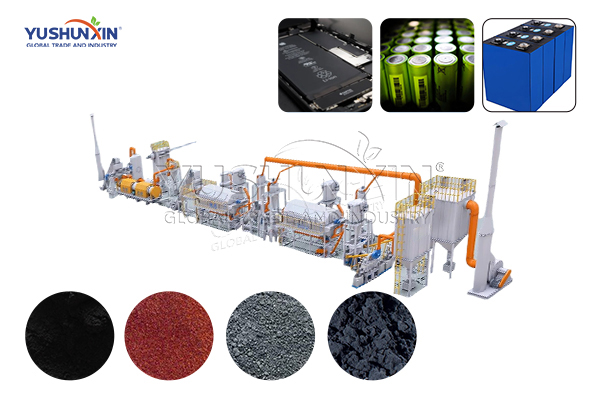
Which details set the shredder throughput?
The rotor diameter, the blade count and the discharge screen decide how fast the shredder accepts the packs. An engineering details for battery line capacity review also examines the feeding conveyor, because a narrow belt limits a large rotor. You compare the declared throughput with the throughput at the design density, since a supplier often quotes the lightest material. The shredder then matches the rest of the line.
How does the separation deck limit the capacity?
The sieving deck and the density separator process a volume that depends on the particle size, and a coarse product slows the separation. A capacity design for a battery material line sizes the deck for the finest fraction, because that fraction sets the residence time. You measure the screen area per tonne and compare it with the reference plant. The adjustment of the screen then recovers part of the lost capacity.
How does the buffer stabilise the output?
A silo between the shredder and the separation allows each unit to work at its own rhythm, and that buffer absorbs a short stop without affecting the whole line. A battery recycling machine capacity selection study defines the buffer size from the cycle time of each unit. You keep the buffer at a defined level during the shift. The line then runs at a stable rate.
How does the contractor verify the capacity?
A full-shift test with the design feedstock gives the achieved tonnage, and that figure becomes the performance value. You keep the weighbridge tickets and the operating log, because the two records show whether a shortfall comes from the equipment or from the feeding. The contractor then corrects the bottleneck before the handover. The plant receives a measured capacity.
Conclusion for EPC contractors and recycling companies
Line capacity is an engineering result of the shredder, the deck and the buffer, and a balanced design reaches the declared figure. A battery line capacity engineers team that supplies the throughput balance, the layout and the test protocol helps the contractor deliver the plant. The supply of spent batteries keeps growing, and a line with a verified capacity serves that supply. If your team needs a reference for the process route and the capacity scope, you can learn more about https://www.sxlbp.com/products/500kg-h-lithium-battery-recycling-plant-for-sale/ before the next design review. The contractor also records the actual throughput of each shift, and that record shows the owner whether the line reaches the figure of the contract before the final payment and during the warranty period. The same record supports the next capacity decision of the company.