A black mass recovery process technical route that adds industrial automation changes the labour, the consistency and the data that the plant produces, and each of those changes affects the value of the investment. You, as a recycling company manager or as a project developer, examine the black mass recovery process technical route against the automation level that the site can support. The automated line needs fewer operators and a more disciplined maintenance routine.
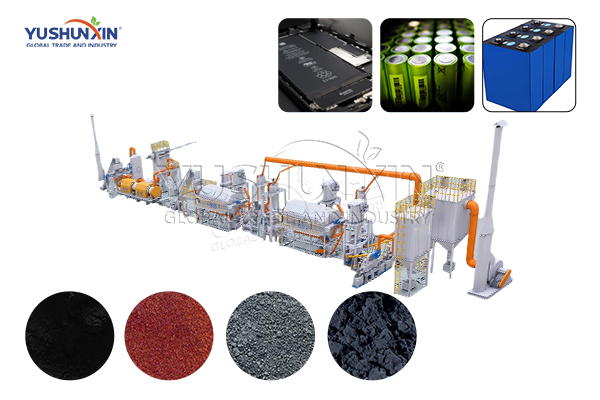
Which stages can automation cover?
The discharge station, the feeding conveyor, the shredder and the separation deck form the stages that benefit most from automation, because those stages repeat the same motion thousands of times. Automation in the black mass recovery process also covers the sampling and the weighing, and those two functions produce the data that the refiner requests. You define the scope of each automated unit before the order, because a partial retrofit costs more than a planned one. The route then follows the chosen scope.
How does automated sorting change the product quality?
A sensor-based sorter identifies the chemistry of each pack and diverts the units that the line cannot accept, and that diversion protects the downstream separation. Automated sorting in black mass recovery also reduces the human error that appears at the end of a long shift, and that reduction stabilises the product specification. You test the sorter with the local battery mix, because a sensor trained on one chemistry misreads another. The plant then produces a consistent batch.
How does automation change the labour cost?
An automated line needs a smaller crew for the same tonnage, and that reduction lowers the labour cost of each tonne. A battery recycling plant automation review also examines the maintenance skill that the new equipment requires, because a technician who can service the sensors costs more than a manual operator. You train the existing team on the new system, and that training protects the availability of the line. The operating cost then settles at a lower level after the first year.
How does the plant verify the benefit?
A monthly report with the tonnage, the labour hours and the downtime gives the manager a comparable figure before and after the automation. You compare the cost per tonne of the two periods, and the comparison shows the real saving. The report also records the product specification, because the buyer pays according to that specification. The manager then decides on the next automated unit.
Conclusion for recycling companies and project developers
Automation changes the black mass route through the feeding, the sorting and the data, and the plant that plans the scope before the order avoids a costly retrofit. A black mass automation advisors team that supplies the scope matrix, the sensor test and the training plan helps the operator reach a stable product. The supply of spent batteries keeps growing, and an automated line serves that supply with a lower labour cost. If your team needs a reference for the process configuration and the automation scope, you can learn more about https://solutionsforewaste.com/battery-recycling-technology/ before the next design review.