A lithium battery recycling plant technology recovers the metals and the black mass from spent packs, and each recovered tonne removes a hazardous stream from the disposal route that a landfill would otherwise receive. You, as a recycling company manager or as a municipal waste officer, examine the lithium battery recycling plant technology against the disposal cost of the region before the plant is approved. The comparison shows how much of the incoming weight the plant converts into a saleable product.
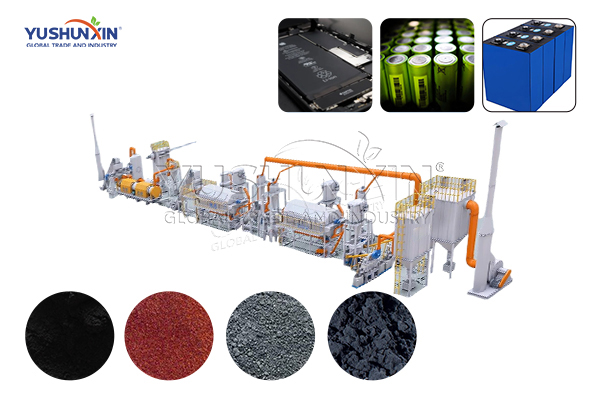
Which battery fractions does the technology recover?
The aluminium case, the copper foil, the steel and the black mass leave the line as separate products, and each of them returns to an industrial buyer. A landfill diversion through lithium battery recycling study weighs each output, because a fraction without a buyer returns to the disposal route as residue. You compare the residue weight with the input weight, and that ratio measures the diversion of the plant. The electrolyte and the separator add a small stream that requires a dedicated treatment.
How does the process handle the hazardous components?
The electrolyte carries a flammable solvent, and the plant removes it in a controlled stage before the shredding. A technology that keeps batteries out of landfill also controls the dust of the black mass, because that dust carries cobalt and nickel. You install the gas cleaning and the dust collection together, and that combination protects both the worker and the environment. The permit then covers the two streams in one file.
How does the plant support a municipal collection programme?
A collection point at a retail site or at a transfer station feeds the plant with a steady volume, and that volume keeps the line at its design rate. A compact battery recycling plant for urban collection fits a site with a limited footprint, and that size helps a city that cannot host a large facility. You train the collection staff on the fire risk, because a damaged pack requires a separate container. The programme then diverts more batteries from the residual waste.
How does the operator measure the diversion?
A monthly report with the tonnage received, the tonnage sold and the tonnage disposed gives the diversion rate of the plant. You keep the weighbridge tickets and the sales notes in one file, because the auditor requests the same evidence as the municipality. The rate then supports the environmental claim that the operator presents to the funding body. A plant that documents a high rate also negotiates a longer collection contract.
Conclusion for recycling companies and municipal programmes
Battery recycling technology reduces landfill dependence when the plant recovers the metal fractions, controls the hazardous streams and keeps the residue small. A battery recycling technology advisors team that supplies the mass balance, the treatment layout and the monitoring plan helps the operator reach that diversion rate. The number of end-of-life batteries keeps rising, and the city that builds capacity early avoids the disposal cost that grows later. If your team needs a reference for the process route and the diversion scope, you can learn more about https://www.sxlbp.com/technology/hydrometallurgical-lithium-battery-recycling-plant/ before the next programme review.