As the global lithium battery recycling industry continues to expand, black mass has become one of the most valuable intermediate materials in the recycling chain. However, obtaining black mass is only the beginning. The real value lies in recovering high-purity metals such as lithium, nickel, cobalt, and manganese through hydrometallurgical processing.
A Black Mass Hydrometallurgical Processing Line transforms mixed battery powder into marketable metal compounds. For recycling companies, battery manufacturers, and resource recovery investors, this process represents the key step in converting waste batteries into profitable products.
What Is Black Mass?
Black mass is the fine powder generated after crushing and separating spent lithium-ion batteries. It mainly contains valuable active materials from battery cathodes and anodes.
Depending on battery chemistry, black mass may contain:
- Lithium (Li)
- Nickel (Ni)
- Cobalt (Co)
- Manganese (Mn)
- Graphite
- Residual aluminum and copper
While mechanical recycling can produce black mass, further chemical processing is required to recover individual metals at high purity levels. This is where hydrometallurgical technology becomes essential.
Why Use Hydrometallurgical Processing?
Compared with direct smelting methods, hydrometallurgical processing offers several advantages.
Higher Metal Recovery Rates
Modern hydrometallurgical systems can achieve metal recovery rates exceeding 95% for key battery materials under optimized operating conditions.
Better Product Purity
The process allows valuable metals to be separated individually and converted into battery-grade compounds, making them suitable for reuse in new battery production.
Lower Energy Consumption
Hydrometallurgical treatment operates at significantly lower temperatures than pyrometallurgical processes, reducing energy demand and operating costs.
Flexible Feedstock Adaptation
The system can process black mass from various lithium-ion battery types, including NMC, NCA, and LFP batteries, with process adjustments based on material composition.
How Does a Black Mass Hydrometallurgical Processing Line Work?
The exact process may vary according to battery chemistry and product requirements. However, a typical hydrometallurgical line generally includes the following stages.
Leaching
Black mass is mixed with chemical reagents to dissolve valuable metals into solution.
During this stage, lithium, nickel, cobalt, and manganese are transferred from solid particles into a liquid phase for further separation.
Solid-Liquid Separation
After leaching, filtration equipment separates insoluble materials such as graphite and residual impurities from the metal-rich solution.
This step improves downstream purification efficiency.
Purification and Impurity Removal
Various chemical reactions are used to remove unwanted elements such as iron, aluminum, and copper.
Careful control of pH, temperature, and reagent dosage helps maximize product quality.
Metal Recovery
Target metals are selectively recovered through precipitation, solvent extraction, ion exchange, or other chemical separation technologies.
Different metals can be recovered individually according to market demand.
Refining and Product Production
The final products may include:
- Lithium carbonate
- Lithium hydroxide
- Nickel sulfate
- Cobalt sulfate
- Manganese sulfate
These materials can be supplied directly to battery material manufacturers or cathode producers. Hydrometallurgical refining is widely used to obtain high-purity metal compounds from black mass. Typical processes include leaching, filtration, metal replacement, and final purification stages.
Key Equipment in a Hydrometallurgical Processing Plant
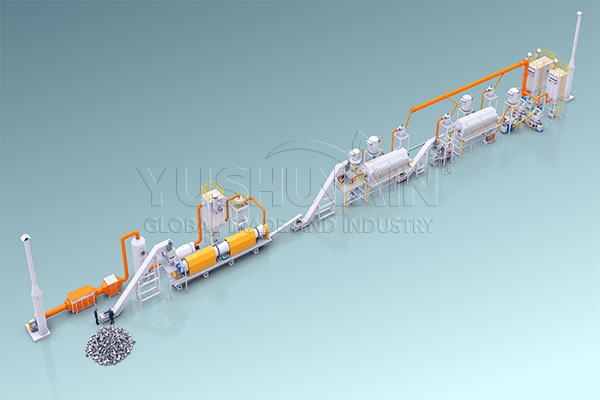
A complete black mass hydrometallurgical processing line may include:
- Leaching reactors
- Filtration systems
- Mixing tanks
- Extraction units
- Precipitation reactors
- Wastewater treatment systems
- Drying equipment
- Automated control systems
Equipment selection depends on feedstock composition, desired metal products, environmental requirements, and project capacity.
Who Can Benefit from This Technology?
Black mass hydrometallurgical processing plants are suitable for:
Lithium Battery Recyclers
Companies seeking to increase revenue by moving beyond black mass sales and recovering high-value metals.
Battery Material Manufacturers
Producers looking to establish closed-loop recycling systems and secure raw material supplies.
Mining and Metal Recovery Companies
Businesses aiming to diversify into secondary resource recovery and urban mining projects.
Environmental Investment Projects
Investors interested in participating in the rapidly growing battery recycling industry.
Building a Complete Battery Recycling Solution
A hydrometallurgical processing line is usually integrated with upstream battery recycling equipment. A complete recycling project often includes battery discharge, crushing, physical separation, black mass production, and hydrometallurgical metal recovery. Physical recycling systems typically separate black mass, copper, aluminum, and iron fractions before the hydrometallurgical stage begins.
For companies planning long-term battery recycling operations, recovering valuable metals from black mass can significantly improve project economics while supporting circular resource utilization. As global demand for lithium, nickel, and cobalt continues to grow, hydrometallurgical processing is becoming one of the most important technologies in the future of battery recycling. Visiting: https://www.sxlbp.com/technology/hydrometallurgical-lithium-battery-recycling-plant/
Leave a Reply