Are you planning to invest in a solar panel recycling business but unsure which capacity fits your budget? The solar panel recycling plant price depends heavily on processing capacity, recycling technology, automation level, and the final products you want to recover. A smaller line may reduce initial investment, while a larger line can improve daily output and long-term profitability. Therefore, choosing the right capacity is one of the most important steps before requesting a quotation.
Why Does Capacity Affect Solar Panel Recycling Plant Price?
Capacity determines the scale of the whole production line. A higher-capacity system usually requires larger dismantling equipment, stronger crushing and separation units, a more advanced control system, and a larger workshop layout. For example, YUSHUNXIN’s solar panel recycling solutions include a 1 t/h mechanical recycling line and pyrolysis-based models such as 10 t/d, 15 t/d, 30 t/d, and 40 t/d options. Different models serve different project scales and budget plans.
Small-Capacity Line: Suitable for Entry-Level Projects
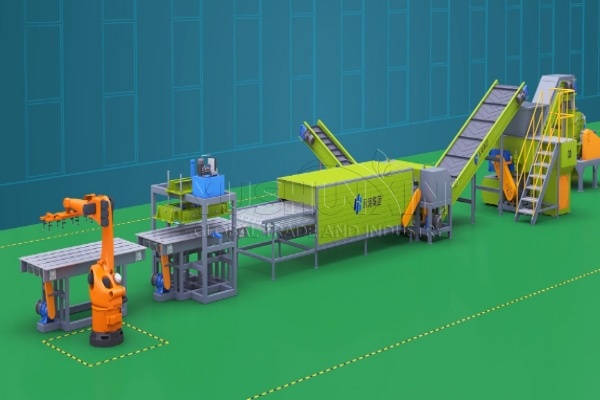
A smaller solar panel recycling machine is usually more suitable for startups, regional recyclers, or investors who want to test the local market first. A 1 t/h mechanical solar panel recycling plant can process single-glass modules through frame removal, glass removal, shredding, fine crushing, grinding, and gravity separation. This route helps recover aluminum frames, glass, copper, and silicon-containing materials with a relatively compact plant arrangement.
For buyers with a controlled budget, this type of line offers a practical balance between investment and operational capability. It is also easier to plan for land use, labor, and utilities at the early stage.
Medium-Capacity Line: Better for Stable Commercial Operation
When your raw material supply becomes more stable, a medium-capacity plant may offer a better return. Lines in the 10–15 t/d range can suit recycling companies that already have access to retired PV modules and want to build a more continuous business model. YUSHUNXIN’s solar panel pyrolysis equipment includes a 15 t/d reactor design developed for photovoltaic panel treatment, which supports larger daily handling volume than small trial-scale systems.
At this stage, buyers should not only compare machine price. They should also consider material separation quality, labor cost, environmental treatment, and future expansion space.
Large-Capacity Line: Designed for Industrial Recycling Plants
For established recyclers, environmental service providers, or investors targeting large-scale PV waste treatment, 30 t/d and 40 t/d lines may be more suitable. These larger systems usually require a higher upfront budget, but they can reduce unit processing cost when raw material supply is sufficient. They are also more appropriate for buyers who expect continuous long-term operation and need a more complete recovery process.
How to Choose the Right Solar Panel Recycling Line for Your Budget?
The best choice is not always the cheapest line. You should match capacity with four core factors: your available raw material volume, target daily output, required recovery products, and investment budget. If you mainly want to enter the market, a smaller mechanical line may be enough. If you aim for stable business growth, a medium-capacity system can offer a stronger balance. If you already have reliable PV waste sources, a large-capacity recycling plant may create better long-term value.
In short, the solar panel recycling plant price by capacity should be evaluated together with your business plan, not as a single number. A well-matched production line can help you control investment risk, improve material recovery, and build a more sustainable recycling project. Visiting: https://www.solutionsforewaste.com/product/solar-panel-recycling-plant-cost/
Leave a Reply