Why the Price Gap Is So Big
A $50,000 lithium battery recycling “machine” is usually a single-stage or small bundled setup designed to process limited volumes with heavy manual work. A $500,000 system is more often a complete, integrated line with automation, safety controls, and higher recovery consistency. The difference isn’t just speed—it’s about what types of batteries you can handle, how safely you can do it, and whether the output meets the purity requirements buyers expect for black mass and separated metals.
Feedstock: What Batteries You Can Actually Process
At the $50,000 level, equipment typically targets pre-sorted, pre-discharged batteries (often production scrap or small cells) and may struggle with mixed formats (pouch, prismatic, cylindrical) or packs containing plastics, steel, and electronics. A $500,000 line is more likely to accept mixed battery streams and include stages for handling modules, casings, and varied chemistries—still often requiring upstream sorting, but with far fewer limitations and less downtime from jams or contamination.
Process Flow: Partial Setup vs Full Recycling Line
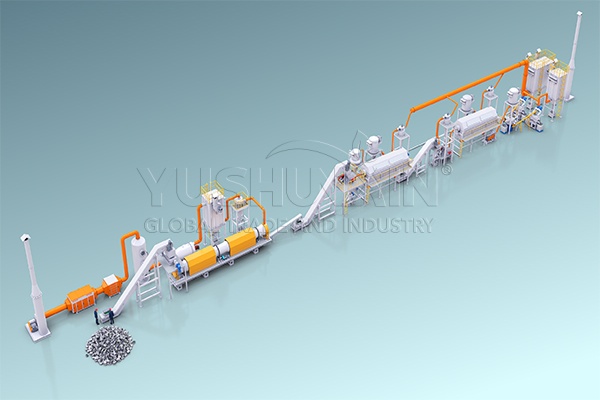
Most lower-cost solutions focus on shredding/crushing + simple screening, sometimes with a basic dust collector. You may end up with a mixed product that needs additional processing elsewhere. Higher-investment lines typically include a more complete chain: discharging or inert treatment, sealed shredding, multi-stage crushing, screening, magnetic separation, air separation, and sometimes wet separation. That fuller process flow is what turns “scrap” into marketable fractions (black mass, copper, aluminum, steel, plastics) with predictable specs.
Safety, Environmental Controls, and Compliance
This is often the biggest hidden difference. A $50,000 setup may have minimal protection against thermal runaway, sparks, electrolyte vapor, HF-related risks, and fine combustible dust. Many buyers and regulators will require better controls. A $500,000 system commonly adds nitrogen/inert shredding chambers, temperature monitoring, explosion venting or suppression, higher-grade filtration (baghouse/HEPA), gas treatment, and enclosed conveying. These features protect workers, reduce fire incidents, and make permitting more realistic.
Automation, Labor, and Operating Stability
Cheaper machines usually mean more manual feeding, more cleaning, more stoppages, and heavier reliance on operator skill. Higher-end systems can include PLC controls, interlocks, auto-feeding, and consistent material flow—so you get higher uptime and more stable product quality. Over time, that can reduce labor per ton and lower the true cost of processing.
Output Quality and Revenue Potential
A basic setup may produce black mass with higher impurities (plastics, aluminum foil, copper fines mixed together), which can be discounted by buyers. A $500,000 line generally improves separation efficiency and reduces contamination, increasing the selling price and widening your buyer pool. If your business model depends on selling higher-grade black mass or separated metals, the more expensive line can pay for itself faster through higher recovery and fewer rejected loads. Visiting: https://www.solutionsforewaste.com/product/lithium-battery-recycling-machine-price/
Leave a Reply