Recycling lithium batteries requires precision, safety, and efficiency—three pillars at the heart of YUSHUNXIN’s engineering philosophy. As battery applications expand across electric vehicles, energy storage systems, and consumer electronics, recyclers face increasing complexity in feedstock composition. At YUSHUNXIN, we focus on building systems that support safe operation, stable throughput, and long-term industrial reliability across multiple battery formats.
Understanding Different Lithium Battery Types
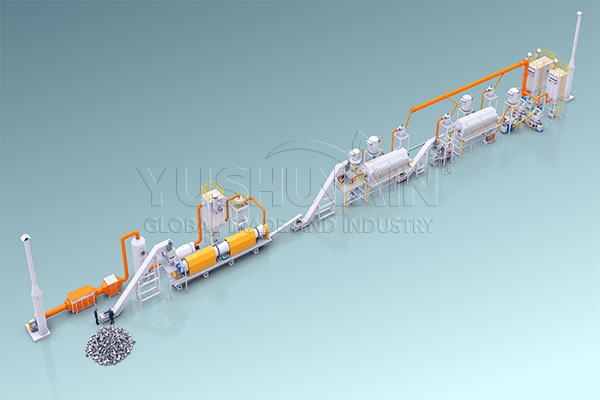
Lithium battery waste is far from uniform. Cylindrical cells, pouch batteries, and prismatic EV modules differ significantly in structure, chemistry, and disassembly risk. Smaller batteries often contain mixed casings and adhesives, while EV battery packs integrate complex electrical and thermal management systems. To address this diversity, YUSHUNXIN develops flexible lithium battery recycling solutions that allow operators to adapt processing configurations without interrupting production flow.
Safe Discharge and Primary Disassembly
Effective recycling begins with controlled discharge and precise dismantling. YUSHUNXIN systems incorporate automated discharge units and mechanical separation equipment that reduce manual handling and minimize fire or short-circuit risk. These processes are especially important when handling damaged or end-of-life EV batteries, where safety margins are narrower. Such design concepts are widely recognized in green recycling solutions for end-of-life EV batteries, where safety and compliance are critical.
Advanced Crushing and Material Separation
Once batteries are safely opened, controlled crushing and sorting become essential. YUSHUNXIN equipment uses enclosed, low-speed crushing combined with screening, airflow separation, and magnetic sorting to recover copper, aluminum, and active material powders. This staged approach supports high-purity black mass recovery while keeping dust and emissions under control, meeting both environmental and operational requirements.
Powder Collection and Downstream Integration
Recovered black mass containing lithium, cobalt, nickel, and manganese is collected through sealed powder handling systems. These materials can then enter further refining stages depending on the recycling route. For operators evaluating process selection, understanding which recycling method is suitable for lithium batteries plays a key role in building an efficient closed-loop recovery system.
Building a Sustainable Recycling Operation
At YUSHUNXIN, equipment design is driven by real-world operating conditions, not theoretical assumptions. Modular layouts, wear-resistant components, and automation-ready controls allow recycling lines to scale alongside growing battery waste volumes. By investing in well-matched machinery, recyclers can strengthen resource security while contributing to a circular battery economy built on sustainable industrial practice. Visiting:
https://www.greenindustrialsolutionsx.com/ev-battery-recyling-maket-share-in-europe-2015-2030/
Leave a Reply