Introduction
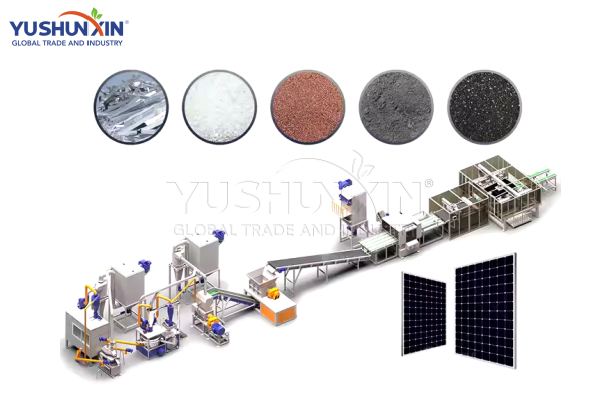
The increasing adoption of solar energy has led to a parallel growth in the number of solar panels reaching the end of their lifespan. Recycling these panels is essential to mitigate environmental impacts and recover valuable materials. Recycling 1000 kg/h of solar panels is a complex process involving various stages, each designed to efficiently dismantle the panels and extract reusable components. This passage outlines the steps involved in this recycling process, highlighting key operations and technologies.
Collection and Transportation
The recycling process begins with the collection and transportation of solar panels to a recycling facility. Panels are typically collected from solar farms, residential areas, and commercial installations. Efficient logistics are crucial to ensure that a steady stream of panels reaches the recycling plant, maintaining the 1000 kg/h processing rate. Proper handling during transportation is essential to prevent additional damage to the panels, which could complicate the recycling process.
Initial Sorting and Inspection
Once at the recycling facility, the panels undergo an initial sorting and inspection phase. This step involves categorizing panels based on their type, size, and condition. Any severely damaged panels might be separated for specialized handling. Automated systems equipped with sensors and cameras can enhance this process by quickly identifying panel types and sorting them accordingly. This stage sets the foundation for efficient downstream processing, ensuring that similar panels are processed together.
Dismantling and Component Separation
Dismantling the solar panels is a critical phase in recycling. Panels are carefully disassembled to separate the aluminum frames, glass surfaces, silicon cells, and various metals. Advanced mechanical processes, such as shredding and crushing, are employed to break down the panels into manageable pieces. Magnetic and air separators are often used to isolate metals like copper and aluminum, while sophisticated optical sorting technologies can identify and separate different materials based on their properties.
Material Recovery and Purification
The separated materials undergo further processing to recover and purify valuable substances. Silicon cells, for example, are treated to remove impurities, allowing the silicon to be reused in new solar panel manufacturing. Glass is cleaned and crushed for use in various applications, including new panel production. Metals recovered from the panels, such as silver and copper, are melted and refined for reuse. These recovery processes not only reclaim valuable resources but also reduce the need for virgin materials.
Environmental Considerations and Safety
Throughout the recycling process, stringent environmental and safety measures are implemented. Proper handling of hazardous materials, such as lead-based solder or cadmium in certain panel types, is crucial to prevent environmental contamination. Facilities must adhere to regulations governing emissions, waste disposal, and worker safety to ensure that recycling operations do not pose ecological or health risks. If you want to know the price of 1000kg/h solar panel recycling machine, please contact us.
Conclusion
Recycling 1000 kg/h of solar panels is a complex but essential process that enables the sustainable management of solar energy waste. By efficiently dismantling panels and recovering valuable materials, recycling operations contribute to resource conservation and environmental protection. Understanding the intricacies of each stage in the recycling process helps improve overall efficiency and fosters innovation in recycling technologies. As the solar industry continues to grow, effective recycling methods will play a pivotal role in supporting sustainable energy solutions. Visiting: https://www.spdsx.com/product/1000kg-h-photovoltaic-panels-recycling-machine-proposal/
Leave a Reply